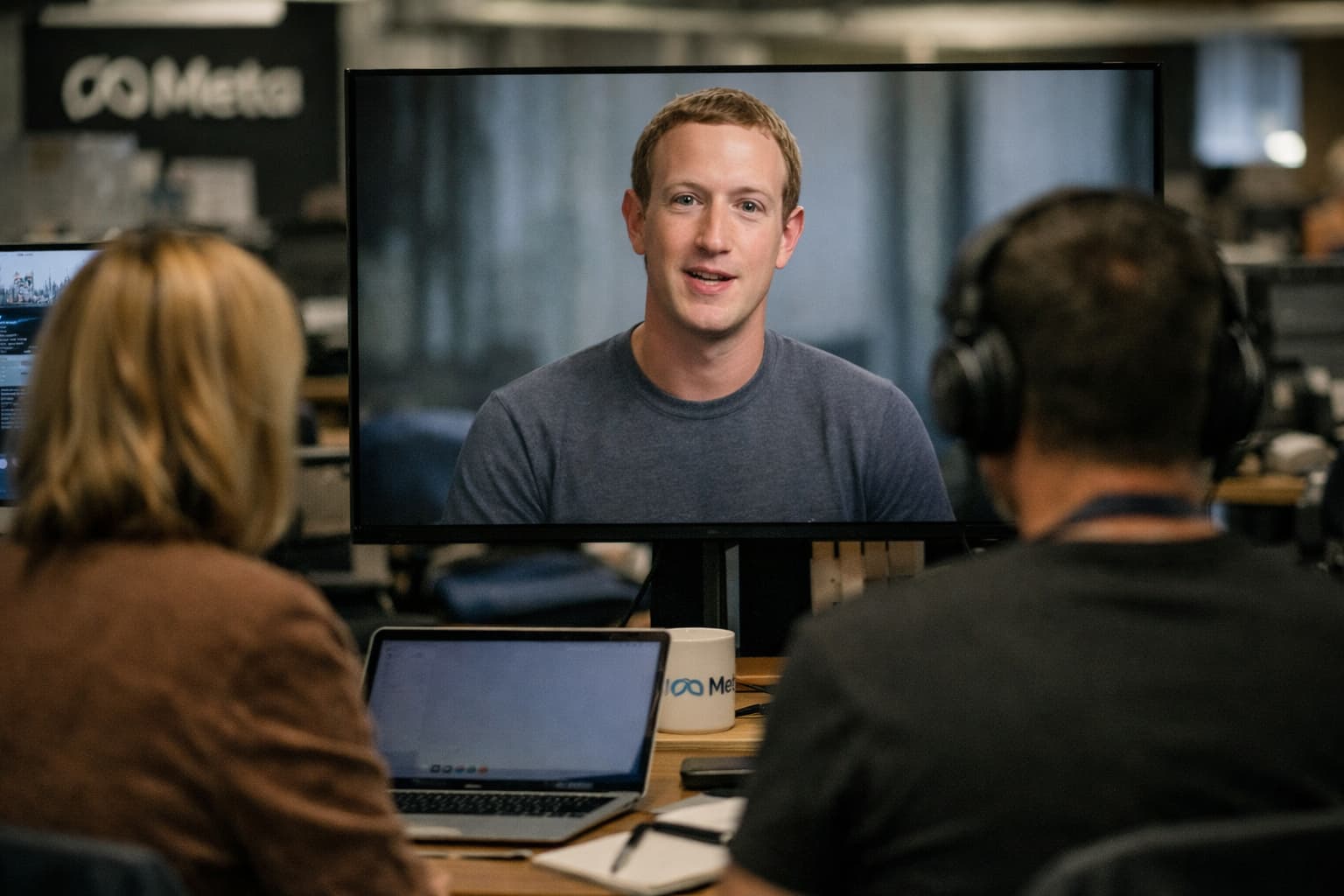
Meta Platforms is developing an artificial intelligence version of its CEO, Mark Zuckerberg, designed to interact with employees and streamline internal communication—marking a bold step in how companies use AI to replicate leadership presence.
A Digital CEO Inside the Workplace
The AI system, trained on Zuckerberg’s past communications, speeches, and decision-making patterns, is intended to answer employee questions, provide guidance, and simulate leadership interactions at scale.
Instead of waiting for executive briefings or internal memos, staff could engage directly with the AI version to gain insights on company strategy, product direction, and workplace policies.
Meta sees this as a way to improve efficiency and ensure consistent messaging across its global workforce.
AI Meets Corporate Leadership
The initiative reflects a broader push within Meta to integrate artificial intelligence into everyday operations. While AI tools have already been used for coding, customer service, and content moderation, creating a digital version of a CEO represents a new frontier.
Supporters argue that such systems can:
- Make leadership more accessible to employees
- Provide instant responses to common questions
- Scale executive communication across large organizations
However, critics warn that simulating a real person—especially a high-profile leader—raises ethical and cultural questions.
Concerns Around Authenticity and Trust
Some experts question whether an AI version of a CEO can truly reflect human judgment, nuance, and accountability. There are also concerns about employees relying too heavily on automated responses for decisions that may require real leadership input.
The idea of interacting with a digital replica of a person may also feel impersonal to some workers, potentially affecting company culture and trust.
Part of a Bigger AI Strategy
Meta has been aggressively investing in AI, positioning itself as a leader in the next wave of computing alongside competitors like OpenAI and Google.
The development of an AI “Zuckerberg” aligns with the company’s broader vision of integrating AI into communication, collaboration, and even identity within digital environments.
What This Means for the Future of Work
If successful, Meta’s experiment could pave the way for other companies to create AI versions of executives, trainers, or experts—changing how organizations operate and share knowledge.
But it also raises a fundamental question:
Can leadership be scaled through AI without losing the human element?
For now, Meta’s digital CEO remains an experiment—but one that highlights how quickly the boundaries between human and artificial intelligence are evolving in the modern workplace.