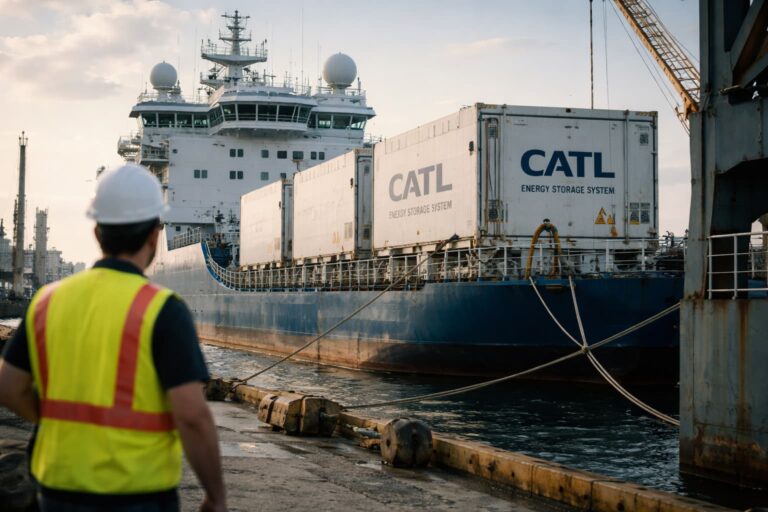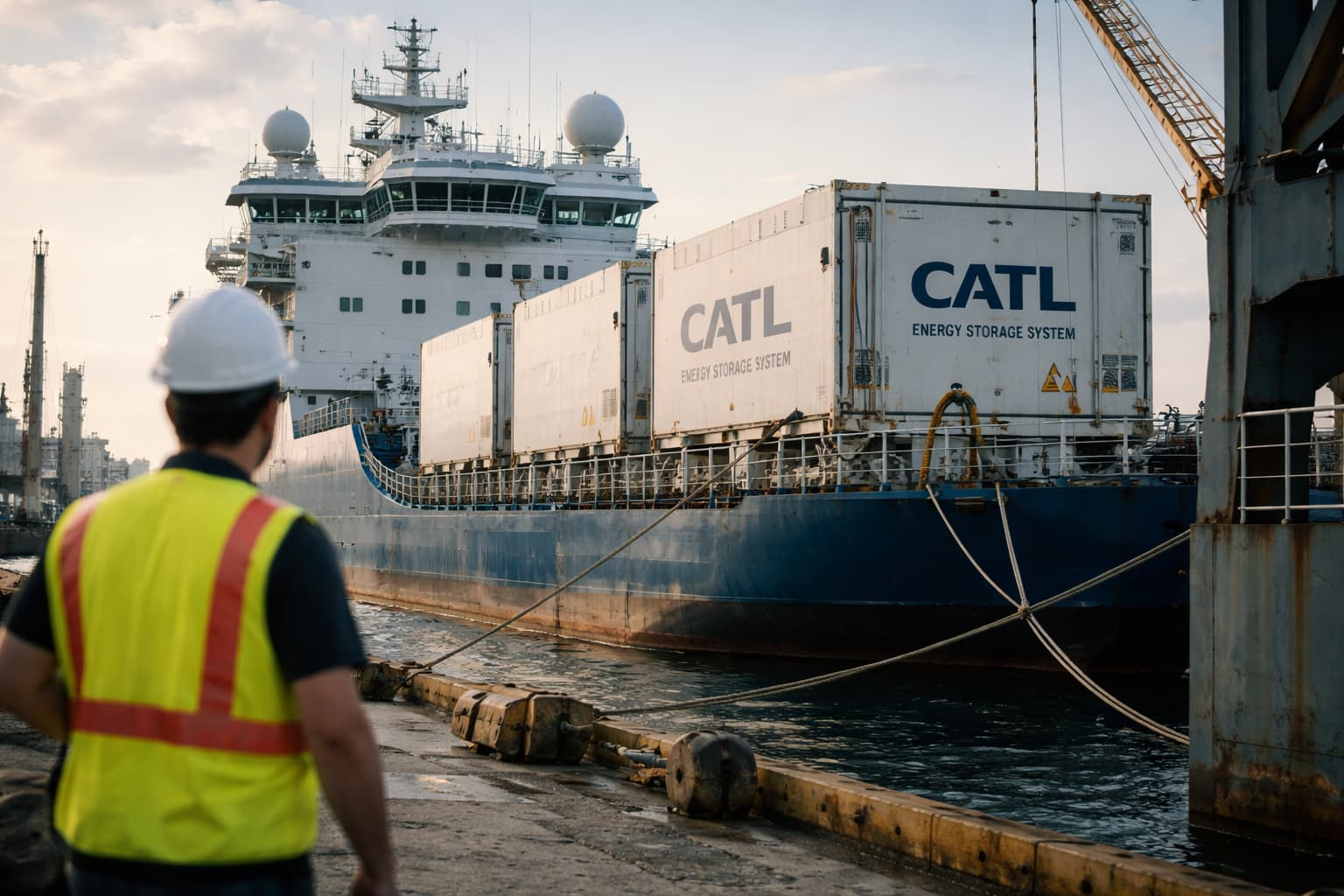
The world’s biggest battery manufacturer, China’s Contemporary Amperex Technology Co. Ltd. (CATL), is expanding its ambitions beyond electric vehicles and into the shipping industry, aiming to transform how vessels are powered at sea.
The company, which already dominates global electric vehicle battery production, is now focusing on developing advanced battery systems capable of operating in harsh marine environments. Executives say the challenge lies in meeting the “extremely high” durability and safety requirements of ships, including long lifespans and reliable performance on water.
Targeting Coastal and Short-Range Shipping
CATL has already deployed battery systems on hundreds of vessels, primarily in coastal and inland waterways. These early projects are seen as a stepping stone toward wider maritime electrification, particularly for ferries, cargo barges, and port operations where shorter routes reduce the need for long-range energy storage.
Industry analysts say battery-powered ships are especially suited for short-distance travel, where emissions regulations are tightening and fuel costs remain volatile. However, deep-sea shipping still presents a major hurdle due to the limited energy density of current battery technology.
New Systems and Infrastructure
To overcome these limitations, CATL is exploring innovative solutions such as battery-swapping systems for ships—similar to those used in electric trucks—along with fast-charging infrastructure at ports. The company is also developing integrated energy networks that link vessels, shore-based charging stations, and cloud-based monitoring systems to optimize efficiency.
These systems could help reduce upfront costs for ship operators while improving operational flexibility, making electrification more viable for commercial fleets.
Challenges Remain for Ocean-Going Ships
Despite progress, industry experts caution that large-scale electrification of ocean-going vessels remains years away. Current battery technologies cannot yet match the energy output of traditional marine fuels for long-haul journeys, and safety concerns—particularly fire risks at sea—must still be addressed.
Even so, CATL’s push into maritime energy reflects a broader global effort to decarbonize shipping, one of the world’s most polluting industries. With tightening environmental regulations and rising demand for cleaner transport, the company is betting that electrification at sea will become the next major frontier for battery technology.