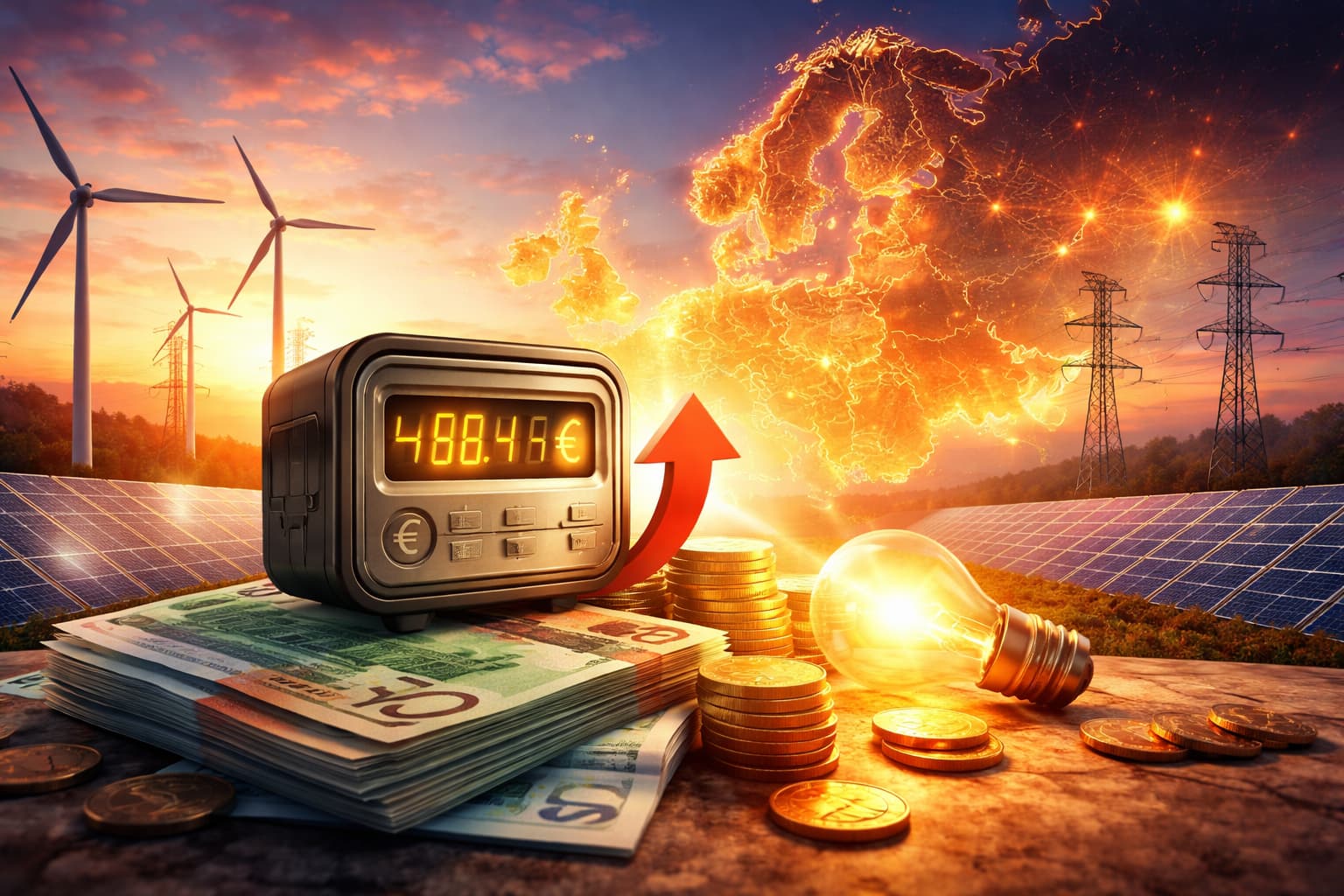
Electricity prices across Europe have been swinging sharply in recent days as the escalating conflict involving Iran disrupts global energy markets and fuels uncertainty over natural gas supplies. The volatility reflects the continent’s continued exposure to global energy shocks, particularly those linked to gas and liquefied natural gas (LNG) flows.
Energy Markets React to Geopolitical Shock
European power markets experienced large price swings as traders reacted to military escalation in the Middle East. Gas prices — which heavily influence electricity prices in many European countries — surged following fears of supply disruptions linked to attacks on energy infrastructure and shipping routes in the region.
The benchmark Dutch TTF natural gas contract climbed sharply, jumping from around €31.9 per megawatt-hour to more than €54 per megawatt-hour in just a few days after the conflict intensified.
Because gas-fired power plants often determine the marginal price of electricity in Europe’s wholesale market, spikes in gas prices have translated into large swings in power prices throughout the day.
LNG Supply Concerns Fuel Instability
One major driver of the market turbulence is the growing uncertainty surrounding global LNG supplies. The conflict has raised concerns about disruptions to shipping routes such as the Strait of Hormuz, a critical corridor for energy exports from the Middle East.
At the same time, analysts have pointed to supply interruptions at key LNG facilities in the region, which have amplified fears of tighter global supply and triggered rapid price movements in European energy markets.
Europe has become increasingly dependent on LNG imports after cutting reliance on Russian pipeline gas in recent years, leaving the region more exposed to global supply shocks.
Economic Impact and Policy Concerns
The renewed surge in energy prices has raised alarm among policymakers and economists who worry about the potential effects on inflation, industrial production, and household energy bills. Analysts estimate that higher energy costs could add 0.3 to 0.5 percentage points to eurozone inflation in 2026 and modestly reduce economic growth.
Energy-intensive industries such as chemicals, steel, and manufacturing are particularly vulnerable to sudden price spikes, while households may feel the effects through higher electricity and heating costs later in the year.
A Reminder of Europe’s Energy Vulnerability
The latest market swings have revived memories of the energy crisis triggered by Russia’s invasion of Ukraine in 2022, when electricity prices across Europe surged to record levels. While energy storage levels and diversified supply sources have improved since then, the current volatility highlights how geopolitical risks can quickly ripple through global energy markets.
For now, traders and policymakers alike are closely watching developments in the Middle East. Any escalation that further disrupts energy supply routes could keep power prices volatile — and reinforce Europe’s push toward more diversified and renewable energy sources.