
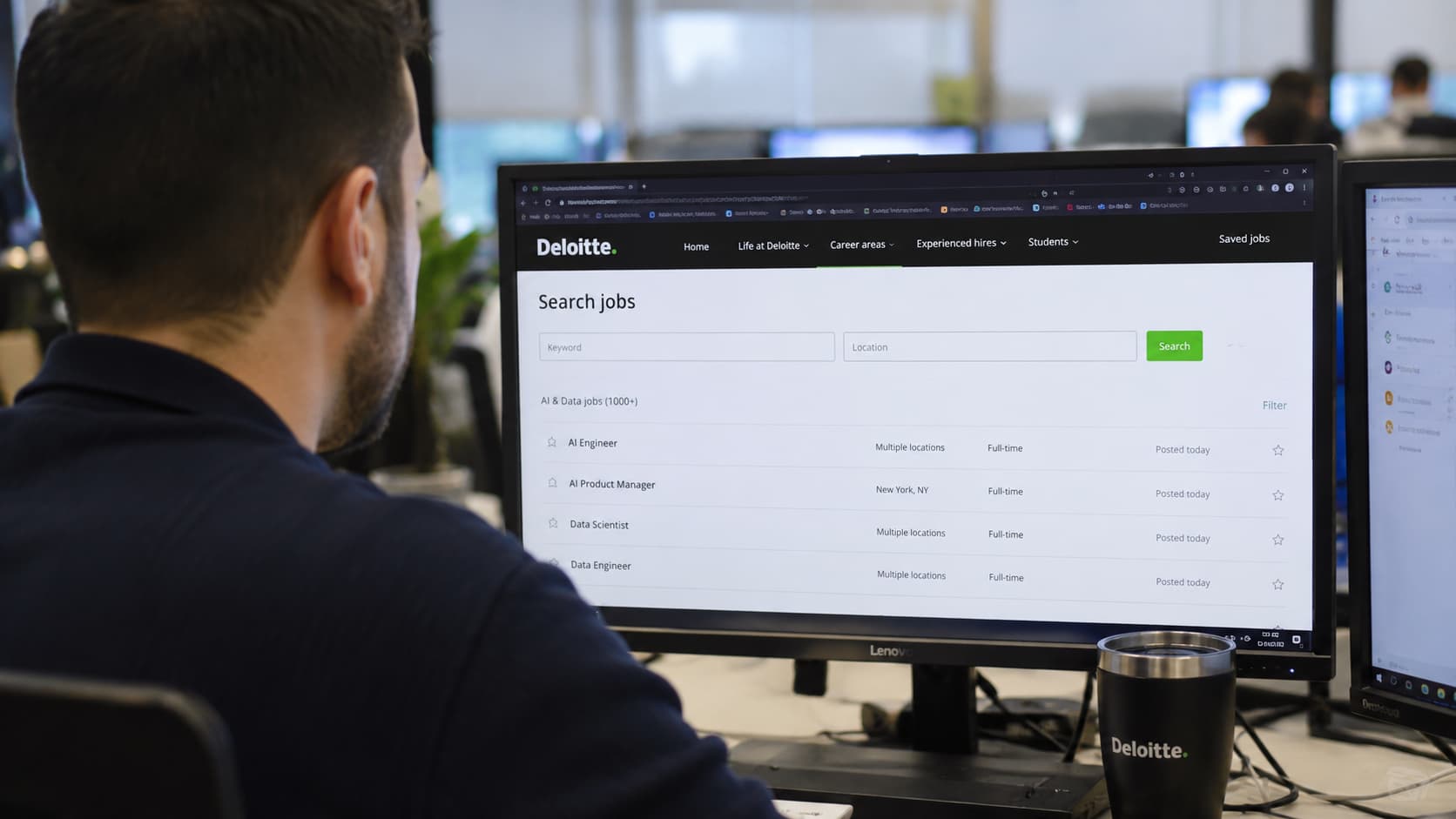
The world’s largest accounting firms are now advertising more jobs for artificial intelligence specialists than traditional auditors, highlighting how rapidly the profession is being reshaped by AI-driven technology.
Data compiled from recent hiring trends show that the Big Four firms — Deloitte, PwC, EY and KPMG — have significantly increased recruitment for AI engineers, data scientists, machine learning experts and automation consultants as demand for digital transformation services surges.
The shift marks a major change for an industry historically built around accounting, tax and audit work.
Consulting divisions across the Big Four have expanded aggressively over the past two years as corporate clients rush to integrate generative AI into operations, compliance systems, cybersecurity and financial analysis. Firms are now competing directly with technology companies and start-ups for highly skilled AI talent.
Recruitment analysts say postings related to AI and advanced analytics now outnumber listings specifically tied to audit roles across several major markets, including the United States and the United Kingdom.
The trend reflects broader changes inside professional services firms. Routine audit tasks such as document review, transaction testing and compliance checks are increasingly being automated using AI tools, reducing the need for large numbers of junior staff traditionally hired into audit departments.
At the same time, demand for advisory services linked to AI implementation has exploded. Companies are seeking guidance on:
- AI governance
- Risk management
- Data infrastructure
- Regulatory compliance
- Cybersecurity
- Automation strategy
The Big Four see these services as a major future revenue source.
Industry experts say the firms are repositioning themselves less as traditional accountants and more as technology-driven business transformation companies.
However, the hiring shift is also raising concerns within the profession. Some analysts warn that declining emphasis on traditional auditing skills could create talent shortages in core assurance work over time, particularly as regulatory scrutiny increases following several high-profile corporate failures.
Others argue the transition is unavoidable. AI is expected to automate many repetitive accounting processes, forcing firms to evolve toward higher-value consulting and technology services.
Universities and professional certification bodies are already responding by redesigning accounting programs to include data analytics, coding and AI literacy alongside traditional financial training.
The transformation could fundamentally change career paths for future graduates. Young professionals entering the Big Four may increasingly find themselves working with algorithms, cloud systems and AI governance frameworks rather than performing conventional audit fieldwork.
For the accounting industry, the message is becoming clear: the future of professional services may depend less on spreadsheets and balance sheets — and far more on artificial intelligence.