Lithium has become one of the world’s most strategic resources, powering everything from electric vehicles to large-scale energy storage systems. As countries accelerate the transition to clean energy, competition to secure lithium supplies and battery manufacturing capacity has evolved into a global economic and geopolitical race.
Demand for lithium-ion batteries has surged as governments promote electric vehicles and renewable energy. This rapid growth has transformed lithium into what many industry observers call the “new oil,” with countries investing billions to secure access to critical minerals and strengthen domestic battery supply chains.
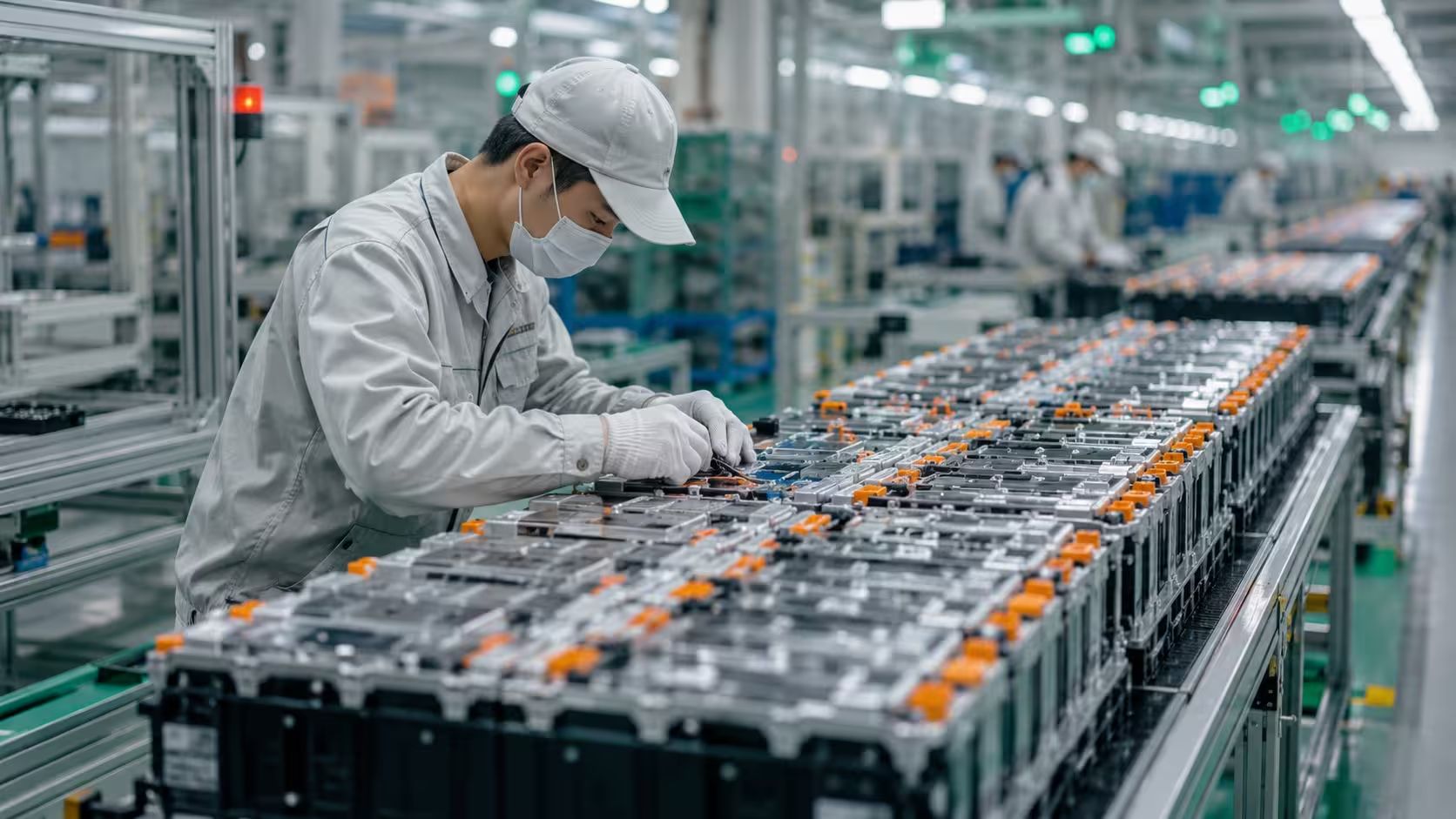
China currently dominates much of the global battery ecosystem. Chinese companies control a significant share of lithium processing, battery manufacturing and refining capacity, giving the country a major advantage in the clean energy economy. Leading manufacturers such as CATL and BYD have expanded production rapidly while investing heavily in next-generation battery technologies.
In response, the United States and Europe are investing heavily to reduce their dependence on Chinese supply chains. Governments have introduced incentives to support domestic mining, battery manufacturing and recycling while encouraging companies to build local gigafactories capable of supplying growing electric vehicle markets.
However, securing lithium is about more than economics. Much of the world’s lithium reserves are located in countries such as Chile, Argentina and Australia, making access to raw materials an increasingly important aspect of international trade and diplomacy. Competition for mining rights and long-term supply agreements has intensified as automakers and battery producers seek to guarantee future supplies.
The rapid expansion of lithium mining has also raised environmental and social concerns. Extracting lithium from salt flats and hard-rock mines can require large amounts of water and energy, prompting criticism from local communities and environmental groups. Companies are therefore investing in cleaner extraction methods, battery recycling and alternative battery chemistries to reduce the industry’s environmental footprint.
Innovation is reshaping the sector as well. While lithium-ion batteries remain the dominant technology for electric vehicles, manufacturers are developing sodium-ion, solid-state and other advanced battery technologies that could lower costs, improve safety and reduce dependence on scarce minerals. These advances may diversify the market while maintaining strong demand for energy storage solutions.
Analysts believe the race for battery leadership will play a crucial role in determining future industrial competitiveness. Countries that successfully secure critical minerals, develop advanced manufacturing capabilities and invest in battery innovation are likely to gain significant advantages in the global clean energy transition.
As demand for electric vehicles and renewable energy continues to rise, the competition for lithium batteries is expected to remain one of the defining industrial races of the coming decades, shaping global trade, energy security and technological leadership.
Reference: Financial Times, “Inside the Global Race for Lithium Batteries” (FT Film). Financial Times video