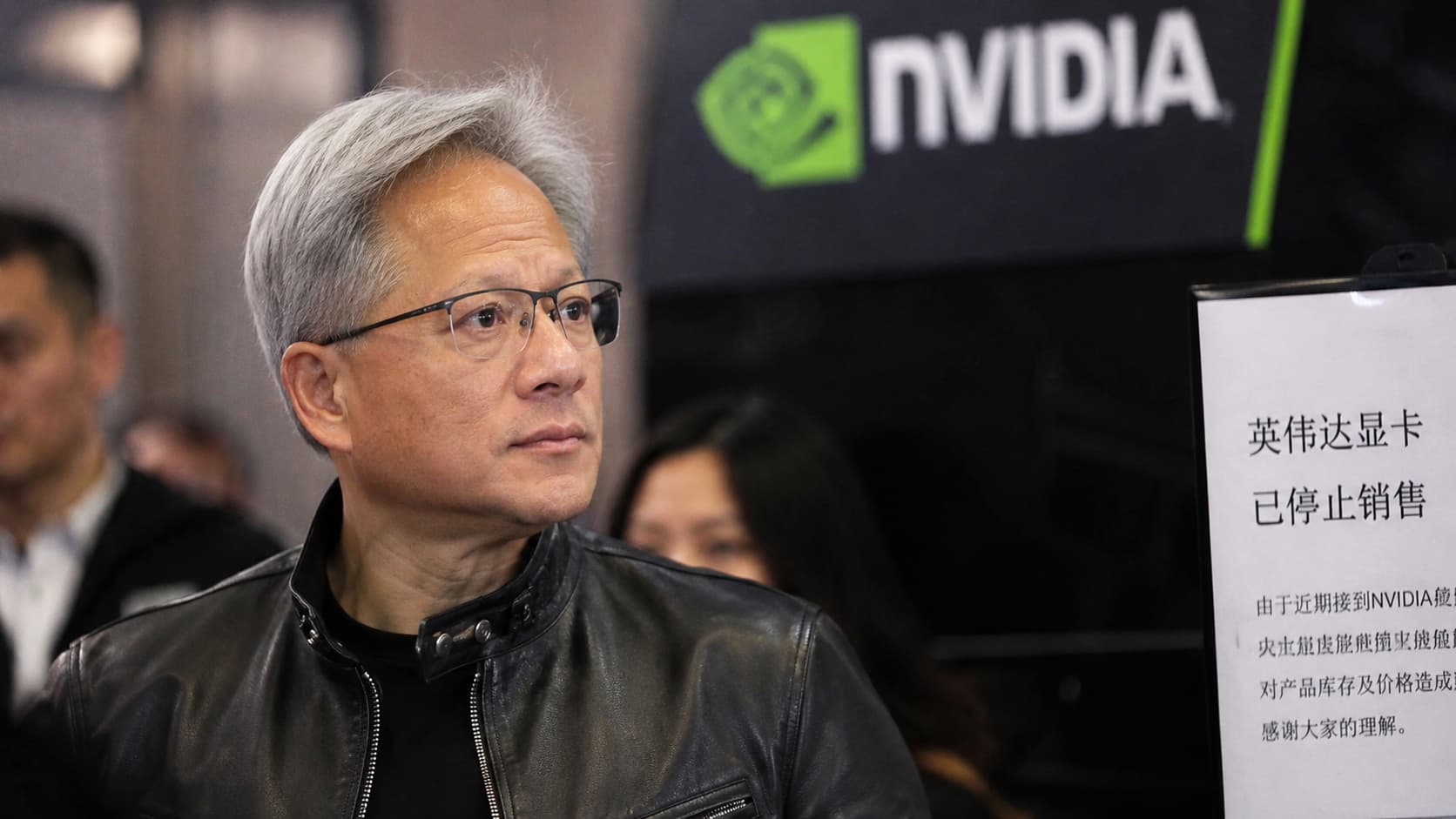
China reportedly moved to block sales of a key Nvidia gaming chip during a high-profile visit to Beijing by the company’s chief executive Jensen Huang, underscoring the growing geopolitical tension surrounding advanced semiconductors and artificial intelligence.
The restriction targeted Nvidia’s RTX 5090D graphics card, a China-specific version of its flagship gaming chip designed to comply with existing U.S. export controls. Chinese regulators are said to have suspended approval for sales and distribution of the chip shortly after Huang arrived in the country for meetings with officials and business partners.
The timing highlighted the increasingly complex position Nvidia faces between Washington and Beijing. The company remains heavily dependent on the Chinese market, but U.S. restrictions on advanced AI chips have forced it to repeatedly redesign products specifically for China.
Nvidia created the “D” series chips to comply with American export rules by reducing certain performance capabilities linked to artificial intelligence workloads while still offering strong gaming performance. However, Chinese authorities reportedly became concerned that even downgraded versions could still support advanced AI applications.
The move reflects broader Chinese efforts to strengthen domestic semiconductor industries and reduce reliance on foreign technology amid escalating tech competition with the United States.
Jensen Huang’s visit itself carried significant political and economic importance. Nvidia has been attempting to preserve relationships with Chinese customers while reassuring U.S. regulators that it complies fully with export restrictions. Huang has repeatedly described China as a critical market for the global technology industry despite tightening controls.
The gaming chip crackdown also signals how the line between consumer graphics hardware and AI infrastructure is becoming increasingly blurred. Modern gaming GPUs are widely used not only for gaming, but also for training AI models, running data centers and supporting machine learning research.
Analysts say both the United States and China now increasingly view high-performance chips as strategic assets tied to national security and economic competitiveness.
The restrictions could further complicate Nvidia’s business strategy in China, where domestic companies such as Huawei are accelerating efforts to develop competing AI chips and graphics processors. Chinese firms have already gained momentum as local customers seek alternatives less vulnerable to foreign sanctions.
Despite the regulatory setback, Nvidia remains one of the dominant beneficiaries of the global AI boom. Demand for its AI accelerators and graphics processors continues to surge worldwide as technology companies invest heavily in AI infrastructure.
But the latest development shows how even gaming hardware has become entangled in the broader struggle for technological leadership between the world’s two largest economies.