China’s dominance in green technologies is creating an unexpected opportunity for Beijing to expand its influence in global finance and strengthen the international role of the renminbi, according to economists and policymakers.
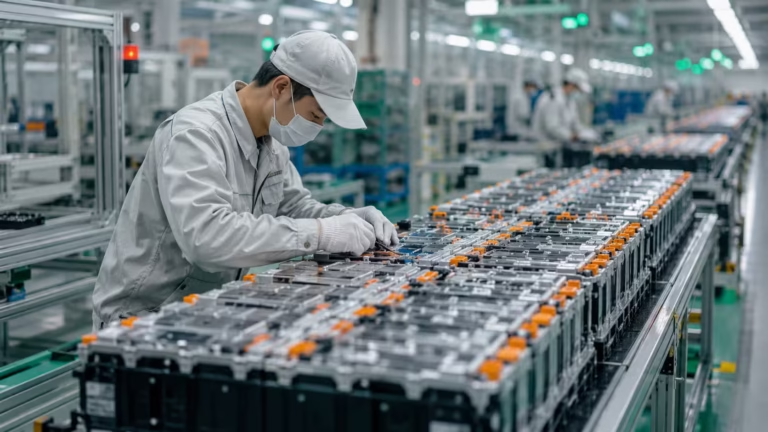
As Chinese companies lead the world in sectors such as solar panels, electric vehicles and battery production, Beijing is increasingly looking to combine its manufacturing strength with financial initiatives that could reshape global capital flows and deepen its economic ties with developing nations.
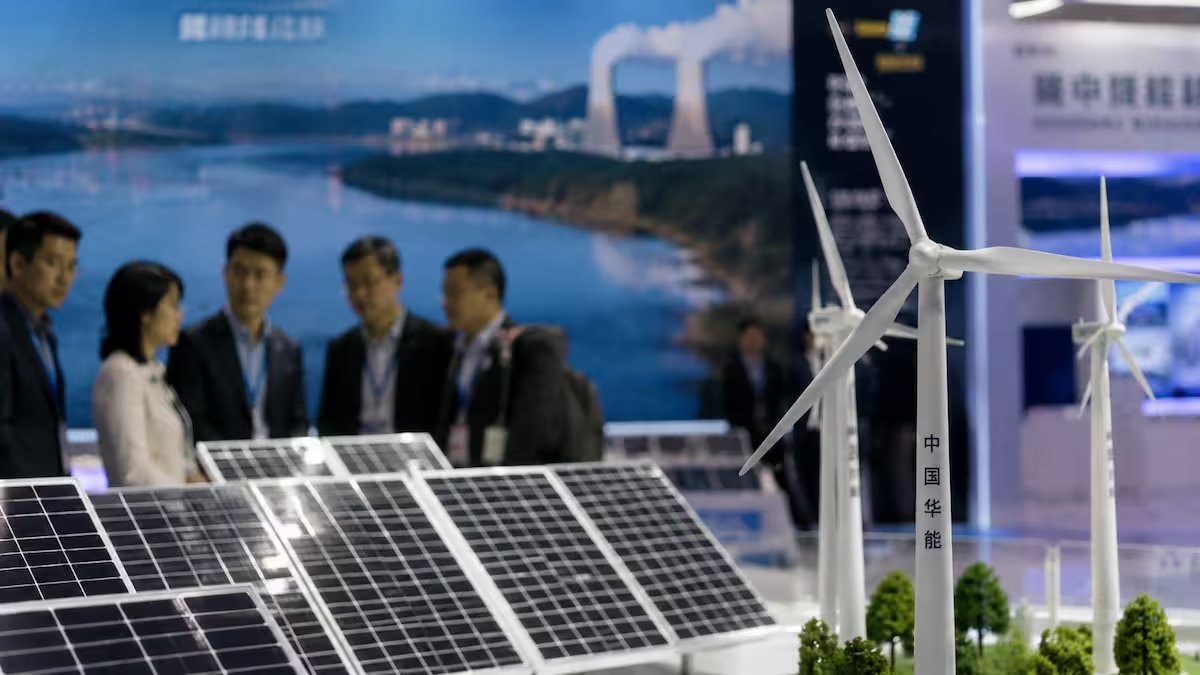
A central element of this strategy is the promotion of green finance and renminbi-denominated funding for low-carbon projects around the world. Former Chinese central bank economist Ma Jun has argued that China’s leadership in clean technology gives it a unique opportunity to internationalize its currency while accelerating the global energy transition.
One of the clearest signs of this trend is the growing market for “panda bonds”—renminbi-denominated bonds issued in mainland China by foreign governments and companies. Countries including Pakistan and Brazil have recently announced green-focused panda bond initiatives to finance sustainable development projects, many of which involve Chinese-made renewable energy technologies.
The appeal of China’s financial markets has been boosted by relatively low domestic interest rates. Benchmark borrowing costs in China are significantly below those in the United States, making Chinese financing increasingly attractive for governments and businesses seeking cheaper funding for green infrastructure projects.
Beijing has also continued to expand its green bond market even as issuance has slowed in parts of Europe and declined sharply in the United States. China became the world’s largest market for green bond issuance last year, reinforcing its ambition to become a global hub for sustainable finance.
The strategy offers economic advantages for China as well. Several clean technology industries, particularly solar manufacturing, are grappling with excess production capacity and intense price competition. Supporting overseas green investment through Chinese financing could create new markets for Chinese companies and strengthen demand for domestically produced technologies.
Supporters argue that China can provide a combination of affordable technology, financing and project execution capabilities that many developing countries struggle to obtain elsewhere. This integrated approach could help fill financing gaps left by Western institutions that have become more cautious about investing in higher-risk emerging markets.
However, challenges remain. Critics point to concerns over debt sustainability and note that some developing nations have previously struggled to repay Chinese loans tied to large infrastructure projects. Others question whether the renminbi can significantly challenge the dominance of the U.S. dollar, given its still limited role in global reserves and international settlements.
Even so, China’s green technology leadership is increasingly becoming more than an industrial success story. It is emerging as a tool of financial diplomacy, giving Beijing a potential pathway to expand its influence in global capital markets while supporting the worldwide transition to cleaner energy.
Reference: Financial Times, “How China’s green tech could boost its global finance ambitions” (2026). Financial Times article