
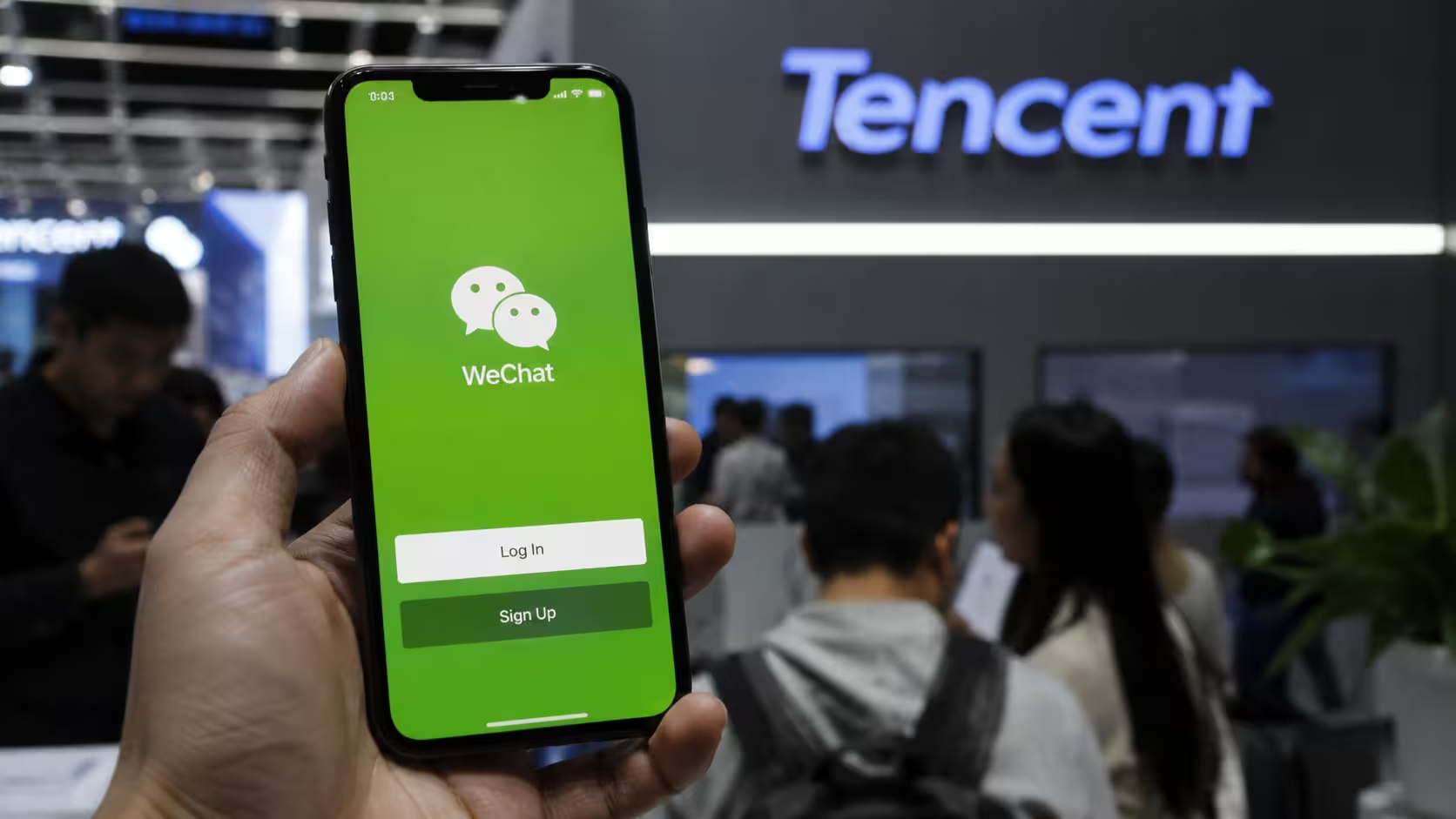
Chinese technology giant Tencent is moving closer to integrating a powerful artificial intelligence agent into its flagship messaging platform WeChat, a step that could significantly expand AI adoption among more than a billion users.
The company is testing an AI assistant capable of performing complex tasks directly within WeChat, according to people familiar with the matter. The move reflects Tencent’s broader strategy to embed generative AI across its ecosystem and strengthen its position in China’s increasingly competitive AI market.
Unlike traditional chatbots that primarily answer questions, AI agents are designed to take actions on behalf of users. Tencent’s planned system could help users complete tasks such as booking services, making purchases, managing schedules, conducting research and interacting with mini-programs without leaving the WeChat environment.
The initiative would give Tencent a major advantage in the race to commercialize artificial intelligence. WeChat remains China’s most widely used app, serving as a platform for messaging, payments, e-commerce, entertainment and business services. Integrating an AI agent directly into the app could instantly expose advanced AI capabilities to a vast user base.
The development comes as Chinese technology companies intensify efforts to build AI ecosystems capable of competing with Western rivals. Firms including Alibaba, Baidu and ByteDance have all accelerated investments in large language models and AI-powered applications.
Tencent has been investing heavily in its proprietary AI models, including the Hunyuan family of large language models. The company is increasingly focused on practical AI applications that can be integrated into existing consumer and enterprise products rather than launching standalone AI services.
Industry analysts believe AI agents represent the next major stage in generative AI development. Instead of simply generating text or images, these systems can execute multi-step tasks, interact with software tools and automate complex workflows.
For Tencent, embedding such functionality inside WeChat could reinforce the app’s status as China’s dominant “super app” while creating new opportunities in advertising, commerce and digital services.
The move also highlights how China’s technology sector is shifting from developing foundational AI models toward deploying real-world applications. As competition intensifies, success may increasingly depend not on who has the most advanced model, but on who can integrate AI most effectively into products that consumers already use every day.
Reference: Financial Times, “Tencent moves closer to launching AI agent for China’s most-used app” (2026). Financial Times article