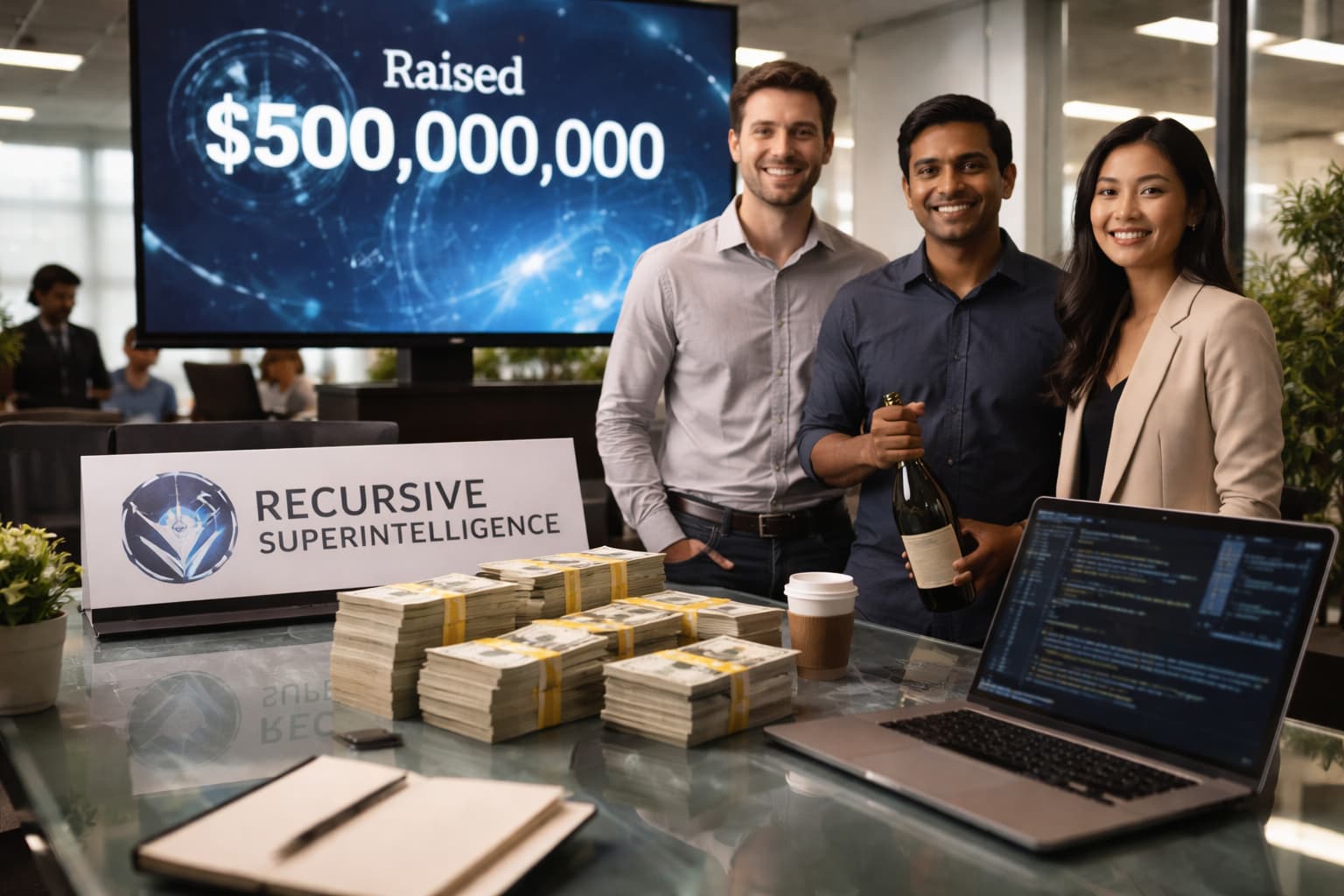
A newly launched artificial intelligence start-up, Recursive Superintelligence, has raised at least $500 million in fresh funding, underscoring surging investor appetite for next-generation AI systems capable of improving themselves without human input.
The company—founded just months ago by former engineers from leading labs including Google DeepMind and OpenAI—is working on so-called “self-teaching” AI, a concept known in the industry as recursive self-improvement.
The funding round values the start-up at დაახლოებით $4 billion excluding the new capital, according to people familiar with the deal. Investors include venture firm GV (formerly Google Ventures) and chipmaker Nvidia, reflecting strong backing from both Silicon Valley and the semiconductor ecosystem.
The round was reportedly oversubscribed, with total fundraising potentially reaching as much as $1 billion as demand from investors continues to intensify.
Founded by a small team of elite researchers—including figures who previously worked on advanced AI systems at top tech firms—the company is aiming to build systems that can continuously refine and enhance their own capabilities. However, the technology remains largely experimental and has yet to be proven at scale.
The concept behind Recursive Superintelligence aligns with a broader shift in AI research toward models that can autonomously improve over time, potentially accelerating development far beyond current large language models.
The deal highlights a wider trend in the AI sector, where newly formed research labs—often staffed by talent from major tech companies—are attracting massive funding despite having no commercial products. Investors are betting that smaller, more focused teams may be better positioned to pioneer breakthroughs in advanced AI.
As competition intensifies between established players and emerging start-ups, the rapid flow of capital into experimental AI ventures signals growing confidence that the next leap in artificial intelligence could come from systems capable of teaching themselves.